GRACE WEIR: ‘THE AS-YET UNSEEN’, The Herschel Museum of Astronomy, Bath.
8 September 2026 - 3 January 2027
Grace Weir (solo Exhibition)
"We only see what we look at. To look is an act of choice.’
‘The relation between what we see and what we know is never settled. Each evening we see the sun set.
We know that the earth is turning away from it. Yet the knowledge, the explanation, never quite fits the sight.’
John Berger, Ways of Seeing, 1972
Grace Weir is the first contemporary artist to have a solo exhibition in the Herschel Museum, originally the home of William and Caroline Herschel, and the house forms the perfect backdrop for Weir’s work. Weir is fascinated by space and time and it is these complex concepts that she explores throughout her practice in which she balances scientific and philosophical scrutiny with an aesthetic sensibility.
Read more >
Installation images
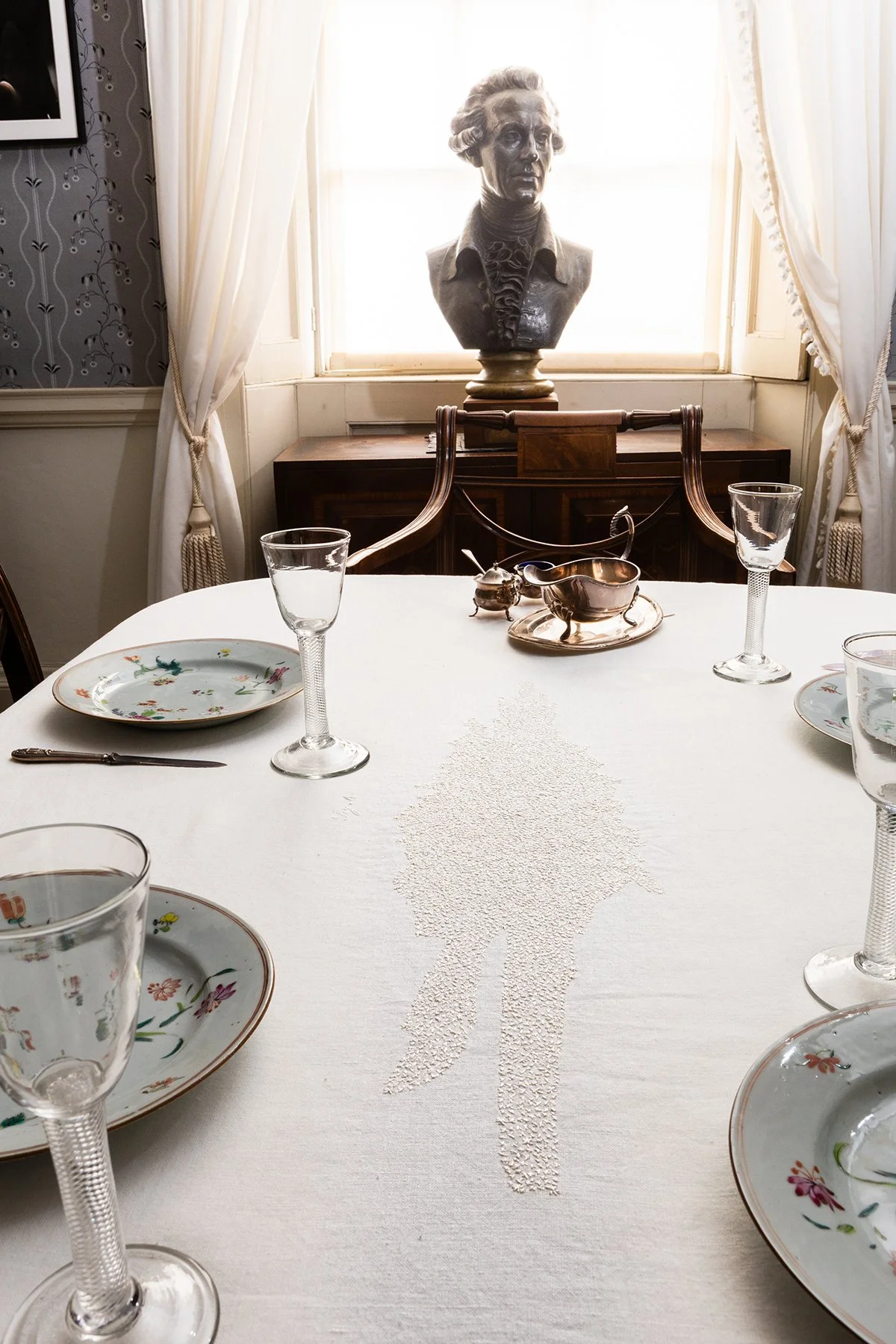
On the construction of the heavens, 2026, Embroidered silk thread on antique linen, 170 x 130 cm
Inspired by William Herschel’s surprisingly accurate 1785 drawing of the Milky Way, Weir transcribes the astronomer’s sketch onto an antique linen tablecloth using hand embroidery. Placed on the dining-room table, used daily by the Herschel family, the work reminds us of the quotidian context in which this extraordinary image was first conceived. Weir re-makes the map as a slow, embodied labour, reframing the cosmos as something stitched into the fabric of the Herschel’s everyday life.
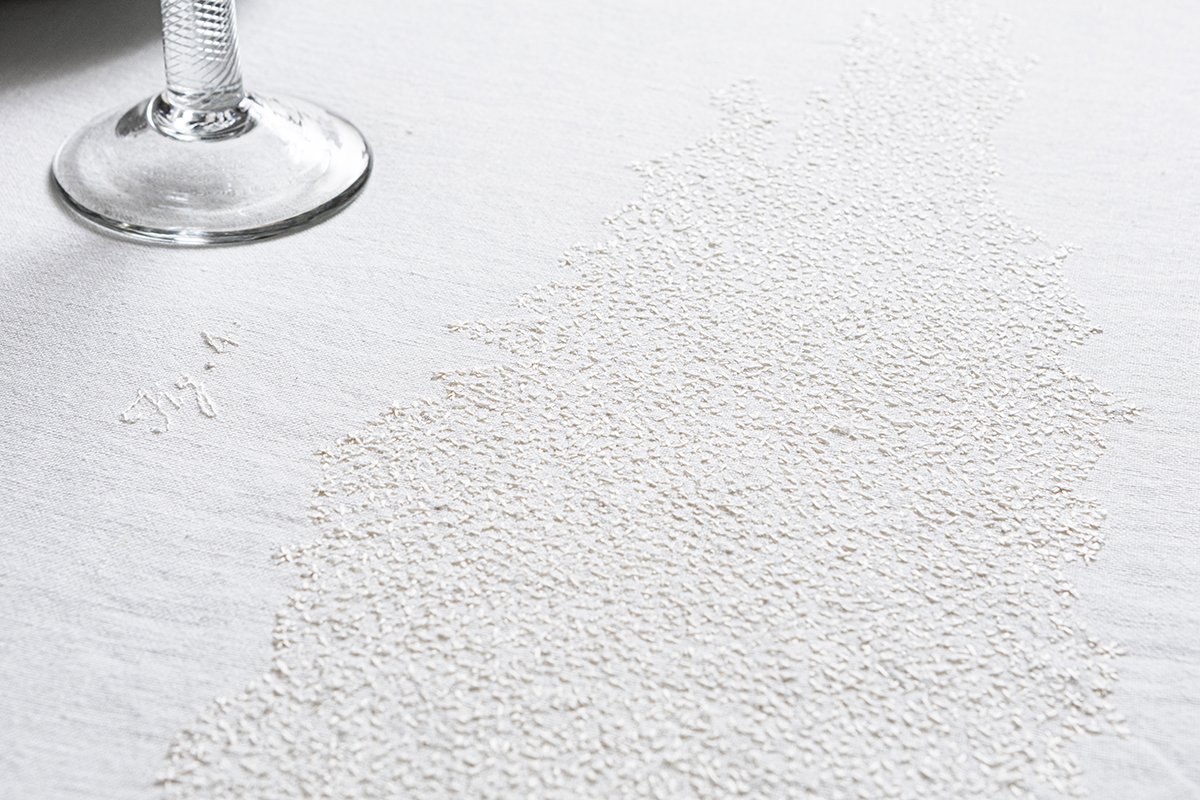
Detail of the above
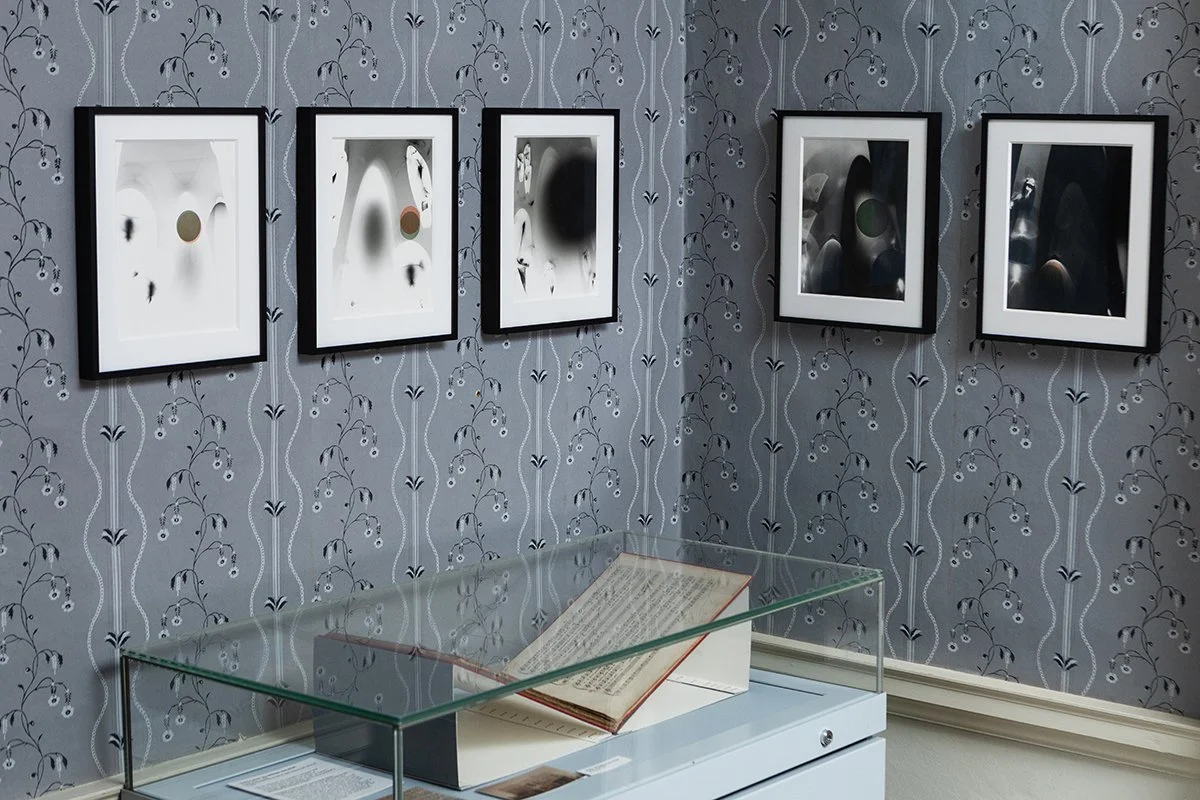
Lingering in the present tense , 2023, Photogram polyptych, non-lightfast photographic inks, Artglass AR99, 33.7 x 28.6 cm (sold as a group of individually)
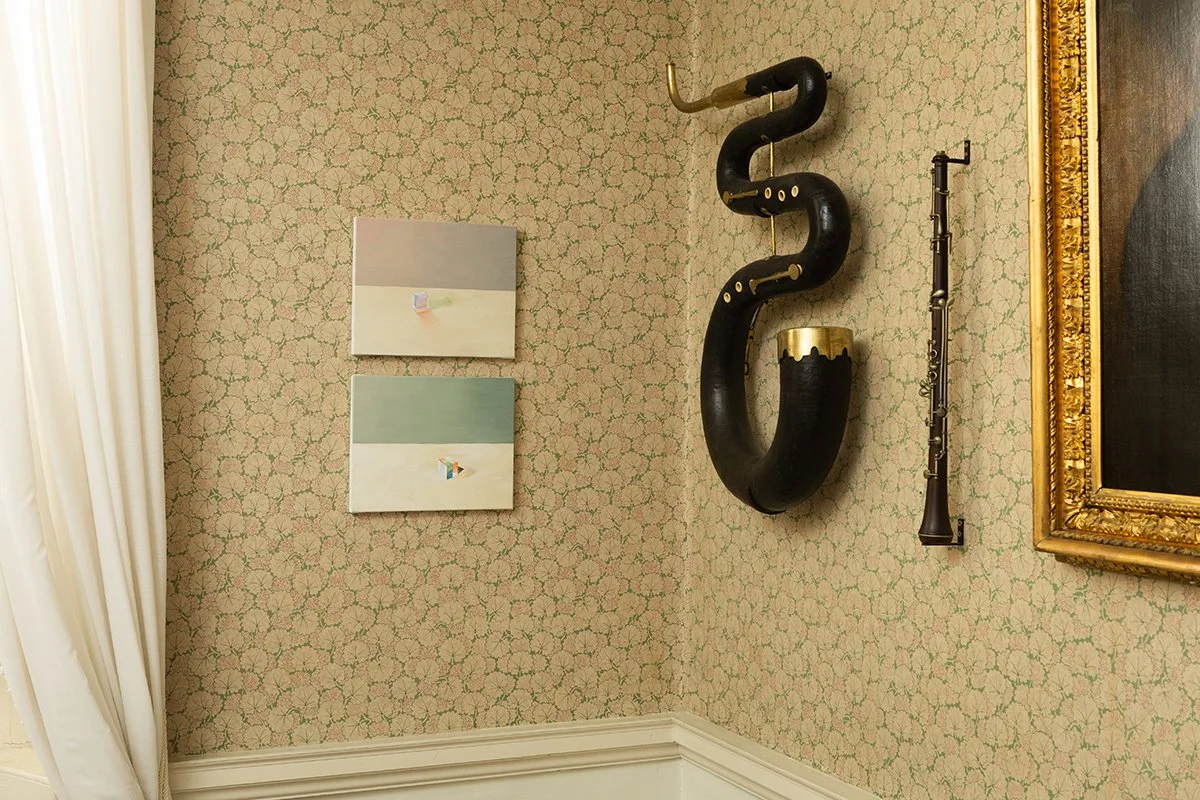
Daylight coming in so fast, I could no longer see, 2026, Oil on canvas, 24 x 30 cm
These small oil studies, of which there are 4 in total, record light passing through the same prism at different times during the day. Their title refers to a note Caroline Herschel made while stargazing of “daylight coming on so fast, I could not repeat the observation”. Weir’s oils also refer to light’s temporality, where each painting becomes a unique record of the changing relationship between colour, shadow, and refraction.
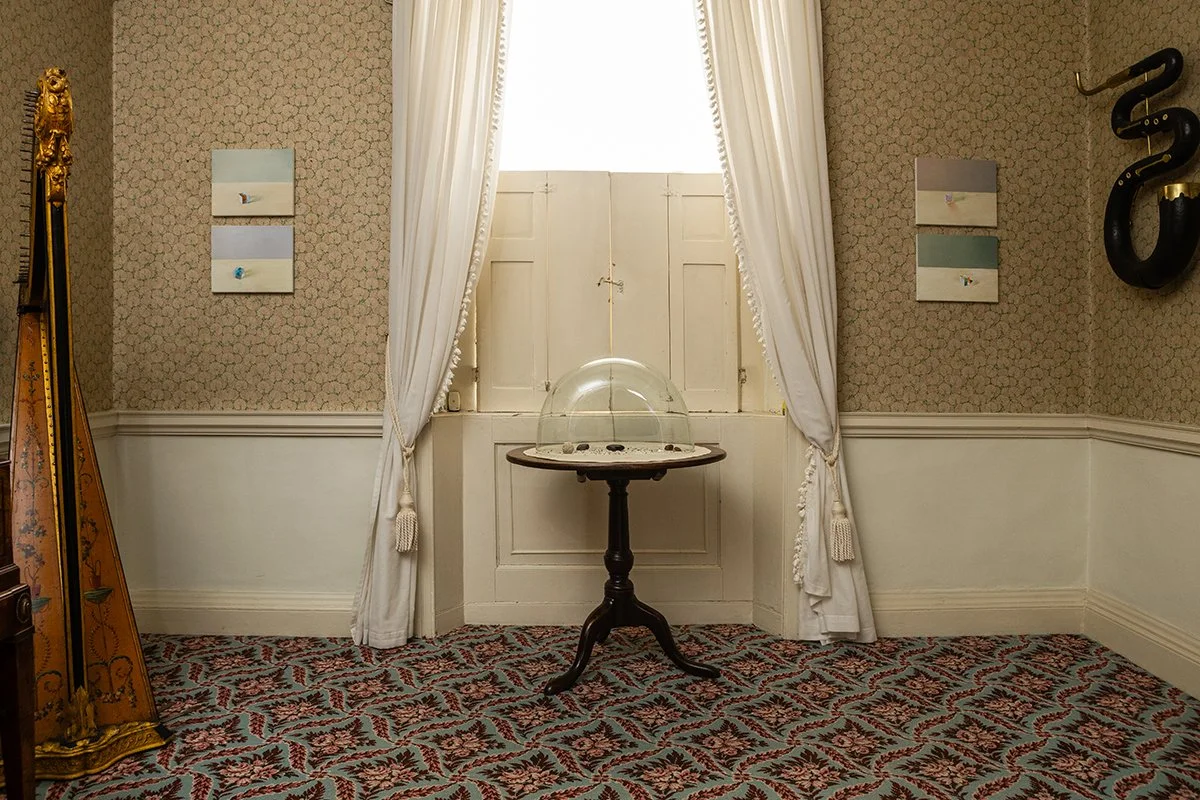
An Imperfect account, 2026, Watercolour and pencil on canvas. Calcite, hematite, meteorite, obsidian and quartz, Table is 70 cm diameter. This is sold separately.
An imperfect account is a loose piece of canvas washed with watercolour drops resembling a cosmos of stars, marked with pencil ellipses referring to Caroline Herschel’s eight comet discoveries. The canvas is scattered with the minerals calcite, hematite, meteorite, obsidian and quartz, and with a small brush resting beside these. The stellar fragments and mineral traces evoke a cosmology in miniature, framed through Caroline Herschel’s description of her first comet discovery calling it an imperfect account. The work suggests observation as labour carried out within the pressures of the household, where scientific attention had to coexist with domestic demands, a labour shaped by care and interruption, yet by highly attuned looking.
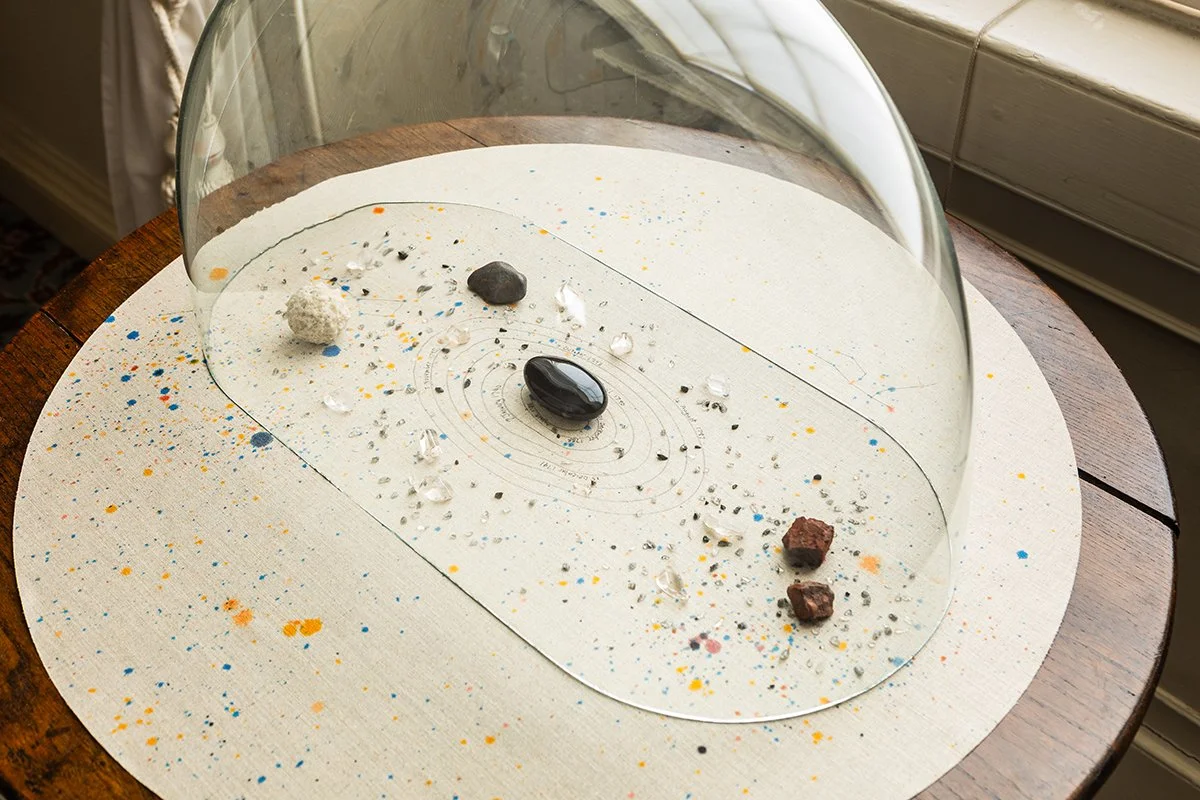
Detail of the above
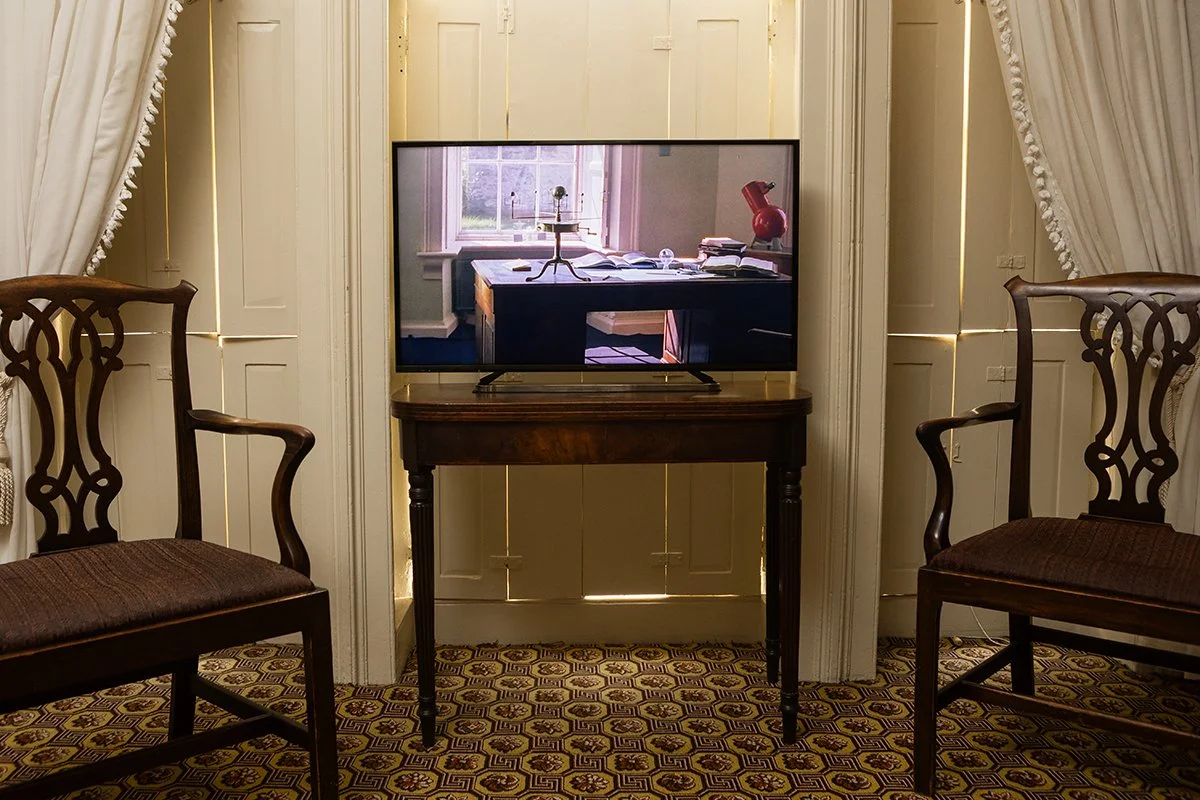
Dust Defying Gravity, 2004, 16mm film transferred to HDV, 4 minutes
The film consists of a single 4-minute tracking shot that explores the dynamic of time and space, tracing through the rooms at Dunsink Observatory, Dublin, documenting the ageing telescopes and measuring instruments arrayed throughout the building. As the camera passes over a mechanical model of the solar system, the dust in the air of the room becomes visible, floating and scintillating like a field of stars.
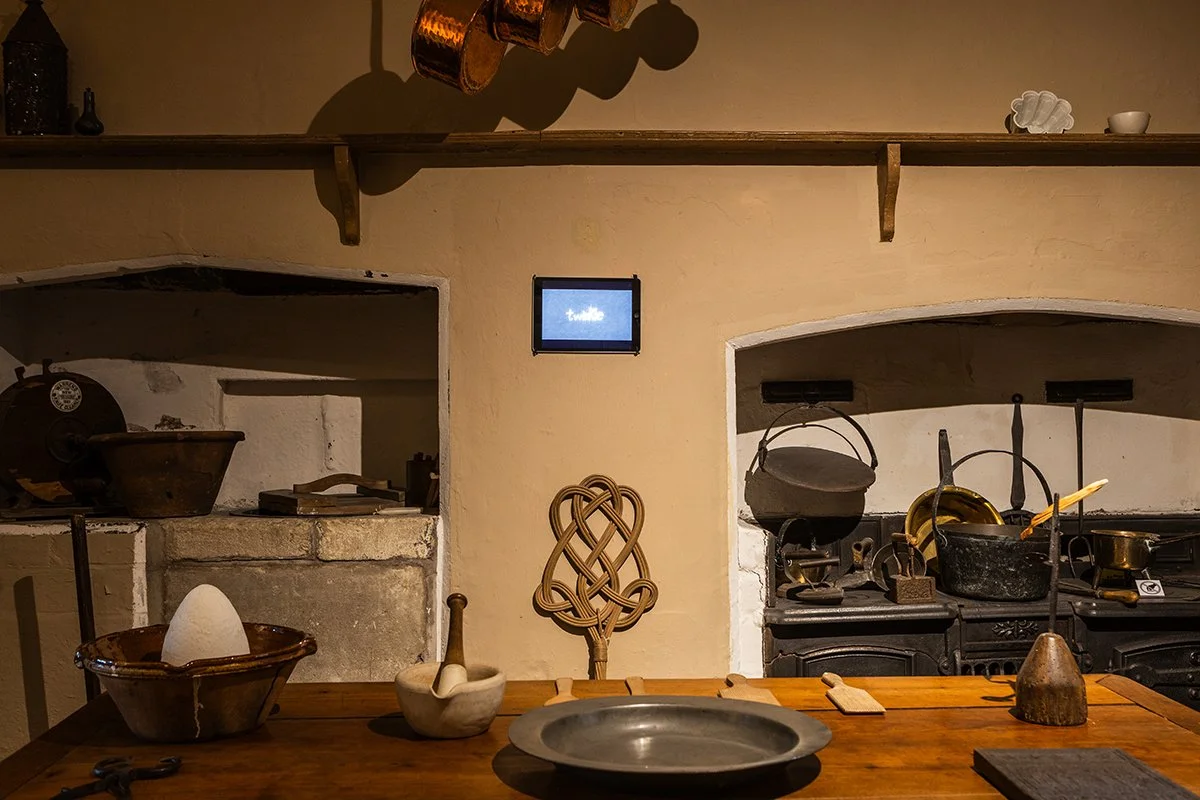
Script, (1) summer studio, 2009, HDV, 2 minutes 30 seconds
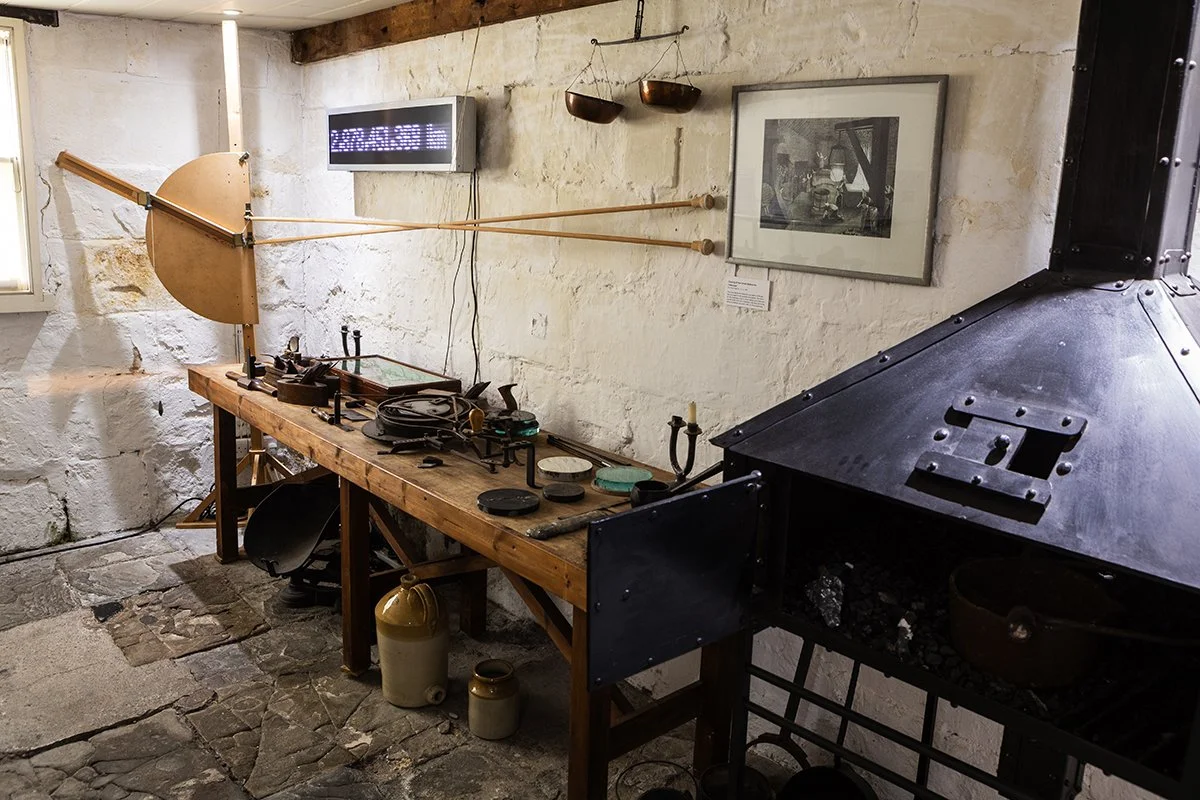
From here to (Uranus), 2026, Computer, LED digital counter, 25 x 110 x 10 cm
This is a digital installation that refers to the constantly changing distances from the viewer on Earth to the planet Uranus. Generated by a computer program, the distance is measured on a counter specifically from the Herschel Museum to the planet, declaring the planet’s current distance as it changes continually in real time. The counter measures the distance from the planet, discovered in this garden, as it draws closer and then recedes, oscillatingf rom the momentary present, and the intimacy of the workshop, to the immensity of the solar system and deep time.
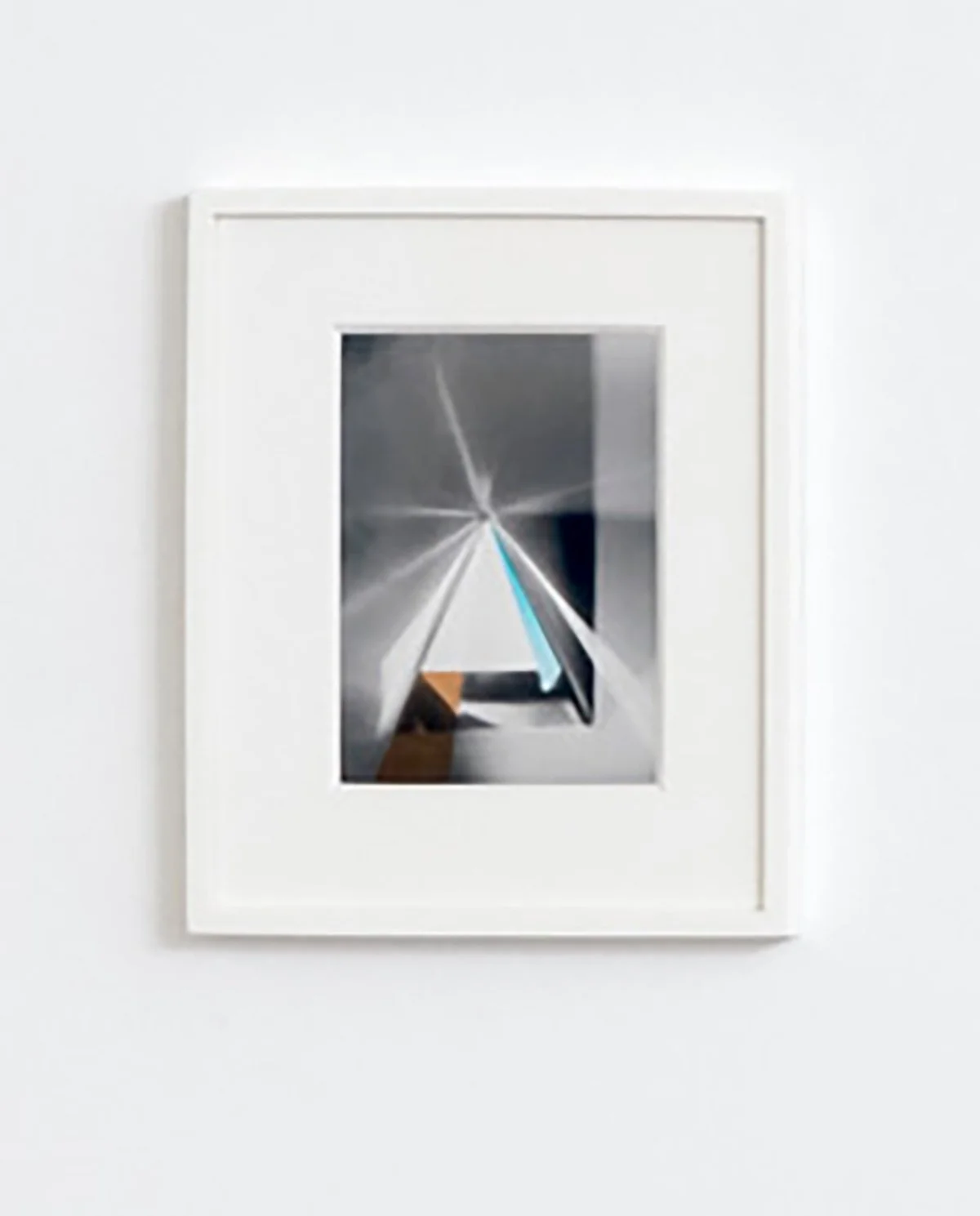
Locus (Blue, yellowish), 2023, Painted photogram, Museum Glass, AR99,
29 x 23 cm
Locus (Blue, yellowish) is a photogram made by refracting light through a glass pyramidal prism in the darkroom, overpainted with non-lightfast inks, and then displayed behind UV-protected museum glass. Countering the photographic instant, the tension in the inks’ instability means the image could exist in different possible states over time. Light oscillates between fixing past exposure and the pull of future light, so the material yields to the temporal and time becomes the work’s form.
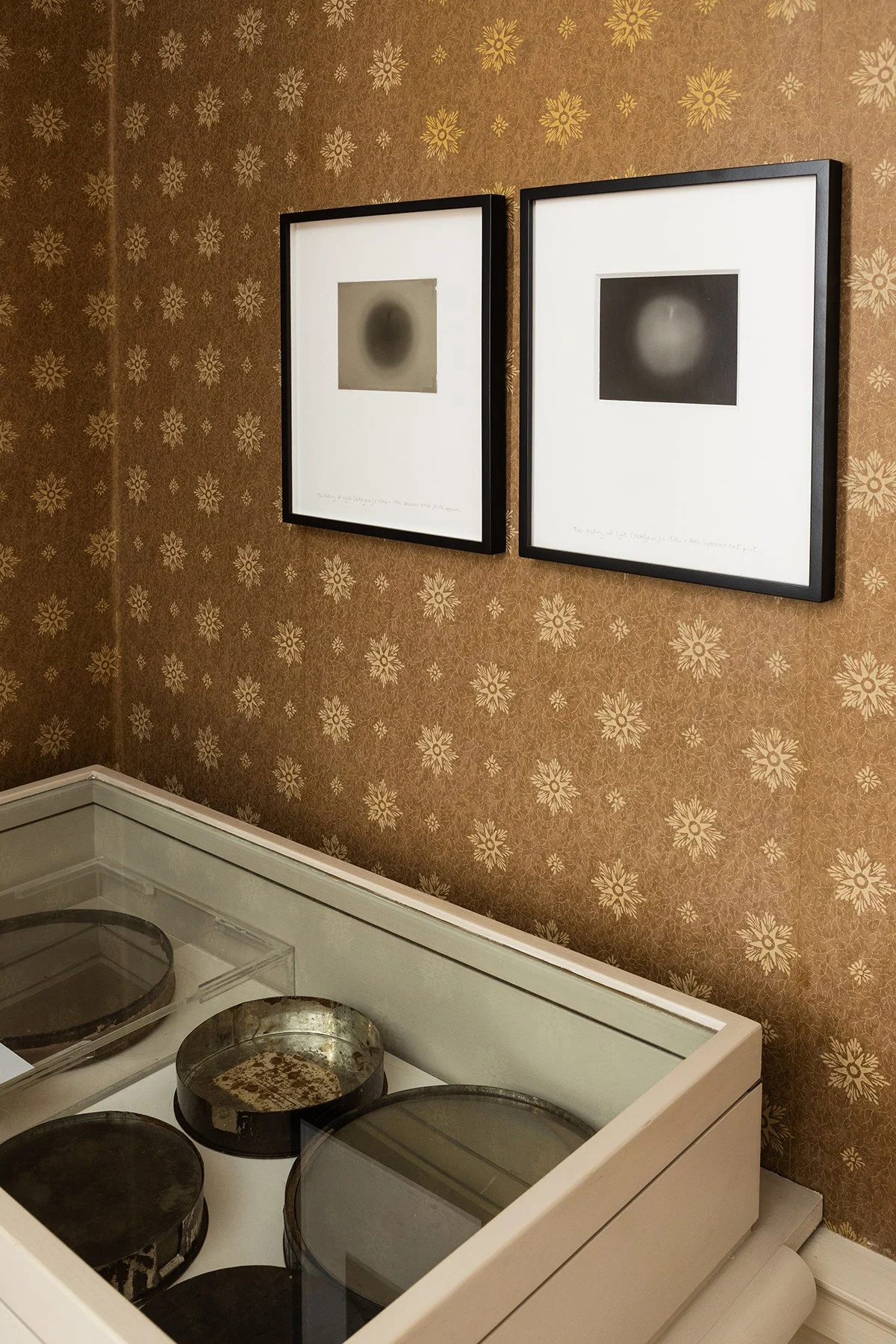
The History of Light (Betelgeuse), c.1374-19.11.2014, Unique gelatin silver photogram, and unique gelatin silver print (17.9.2015). Museum glass AR99 Protect, Each work 30 x 26.6 cm
The history of light (Betelgeuse) is a series of photograms made directly with the light from the dying star Betelgeuse in the constellation of Orion. As it takes 640 years for the light from the star to reach us, there exists the possibility that the star has already died, however we will only discover this 640 years later. Each photogram was made by following the star from the slopes of Mount Teide in Tenerife, Spain, over the course of one night, tracking the star as the Earth rotated beneath it. The photograms are dated according to the duration it took for the light to leave the star Betelgeuse, travel across space, reach a simple camera obscura made by the artist containing the film and to record the image, for example c. 1374 – 19th December 2014. The photograms, and the prints made from them, capture two contrasting temporalities of the dying star, becoming a record of the light from the past, an unmediated image made only with the star’s light.